Image was taken with a Seestar S50 telescope with the attached solar filter capturing a RAW movie file and stacking within the unit then processed in PS.
|
Active Sunspot AR 4549 is now heading toward the western limb of the Sun with another large sunspot showing itself on the eastern limb that’s just been designed AR 4551
Image was taken with a Seestar S50 telescope with the attached solar filter capturing a RAW movie file and stacking within the unit then processed in PS.
0 Comments
~Nearly sunspot free Sun ~
I rushed out yesterday to take a picture of what I thought was a sunspot free Sun, but on checking my images today there’s a sneaky little sunspot showing itself on the eastern limb…Ha-ha Oh well… as least I tried :-) Image was taken with a Seestar S50 telescope with the attached solar filter capturing a RAW movie file and stacking within the unit, processed in PS. The only sunspot that’s quite active on the surface of the Sun is AR 4513; it produced a M7- class solar flare on the 25th August so by today a CME may arrive for people to enjoy in those Arctic and Antarctic latitudes :-D
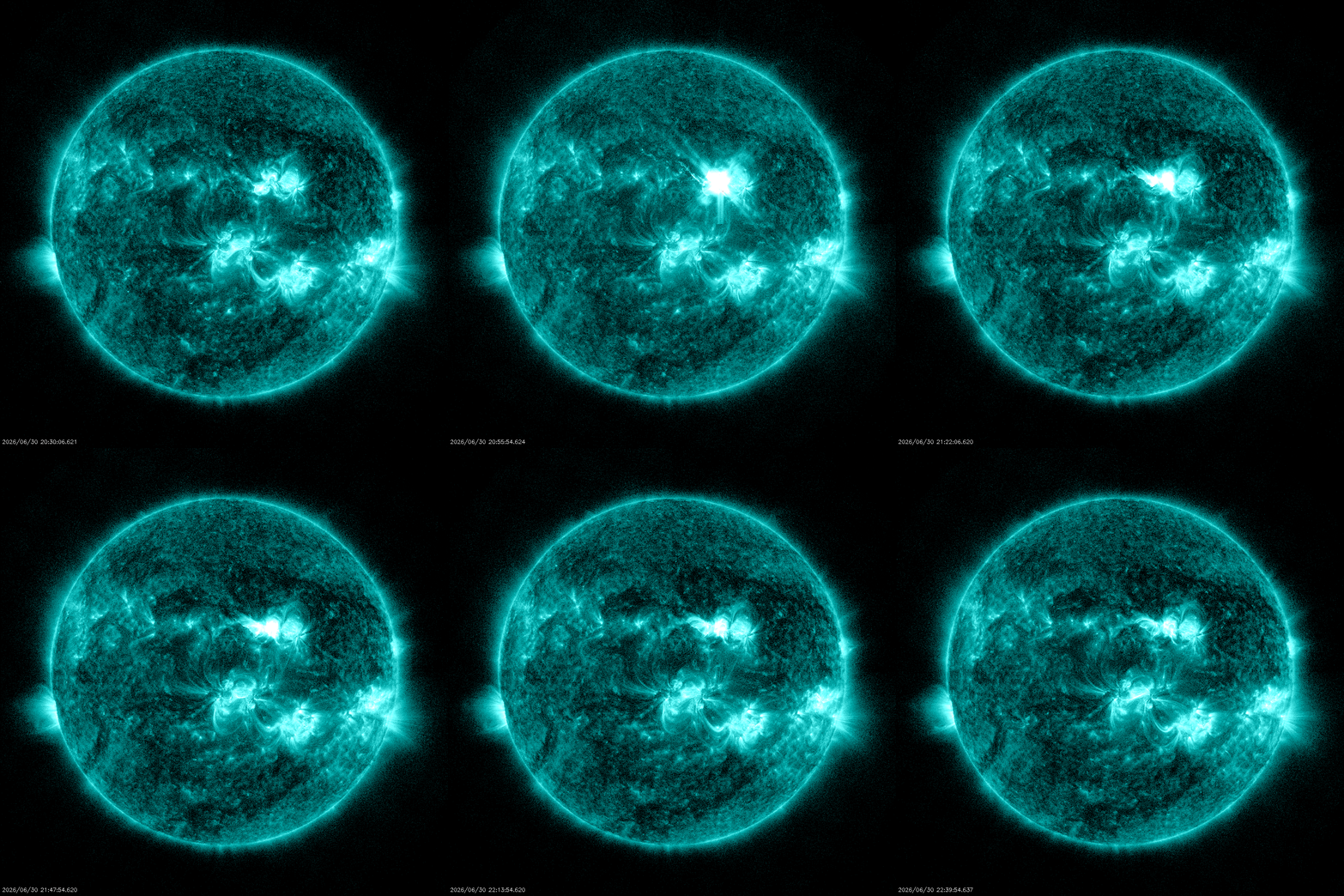
Image was taken with a Seestar S50 telescope with the attached solar filter capturing a movie, which was stacked in the unit and processed in PS. Both of these two sunspots are extremely large and active and are producing solar flares; streams of plasma are arriving at the Earth from the eruption on the 1st July. Check in with Spaceweather.com to see all the images from the event at: https://spaceweather.com/archive.php?view=1&day=03&month=07&year=2026 Images taken with Seestar S50 telescope with attached solar filter, RAW movie file captured and stacked within the unit and processed in PS. Solar Dynamics Observatory (SDO) website at: https://sdo.gsfc.nasa.gov This is a really huge sunspot on the surface of the Sun and is harbouring energy for and X-class solar flare, the other large sunspot AR 4479 erupted yesterday and produced an X1.1-class solar flare as recorded on NASA’s Solar Dynamics Observatory (SDO). Solar Dynamics Observatory (SDO) website at: https://sdo.gsfc.nasa.gov Spaceweather.com has all the update on this exciting solar flare at: https://spaceweather.com/archive.php?view=1&day=01&month=07&year=2026 The SDO recorded the extreme ultraviolet flash as seen below: https://spaceweather.com/images2026/30jun26/x1flare.gif My image taken with the Seestar S50 telescope with the attached solar filter, RAW movie file captured and stacked within the unit and processed in PS. There are quite a lot of small sunspot groups on the surface of the Sun today and most of them are following a path across the northern hemisphere with larger active sunspots AR 4455 & AR 4448 rotating toward the western limb.
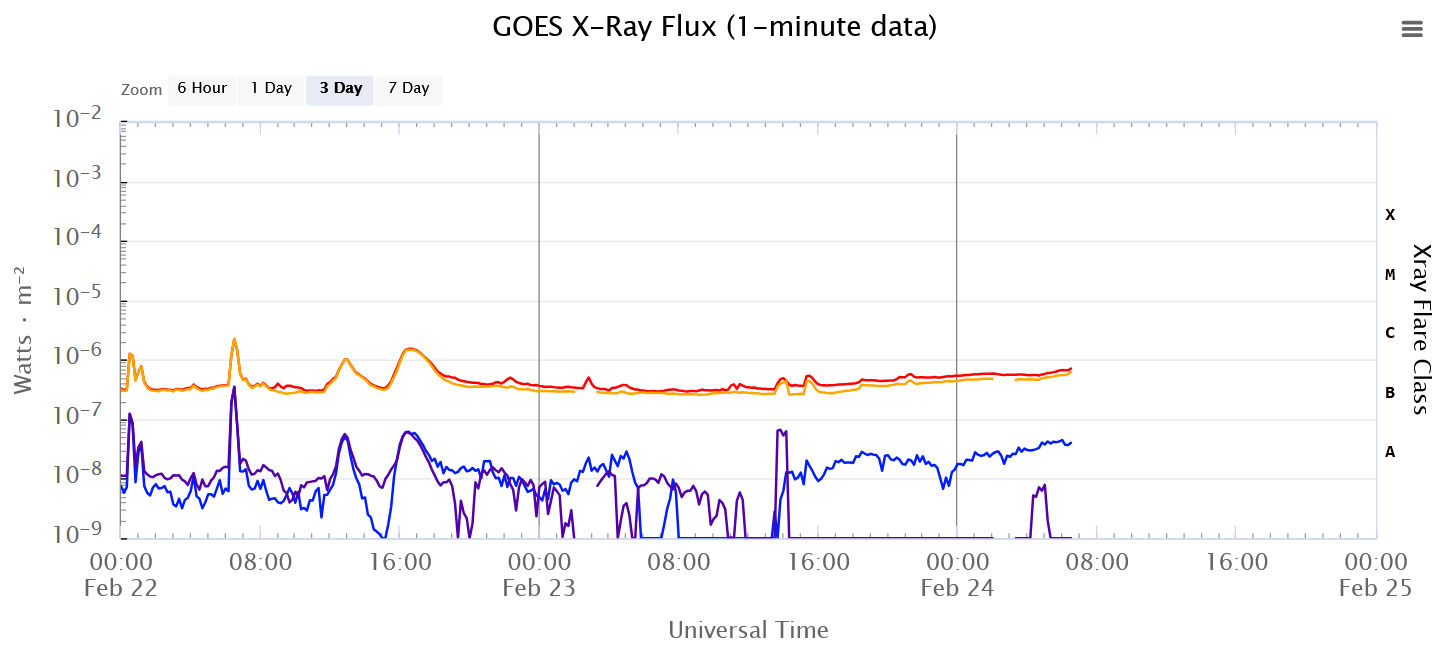
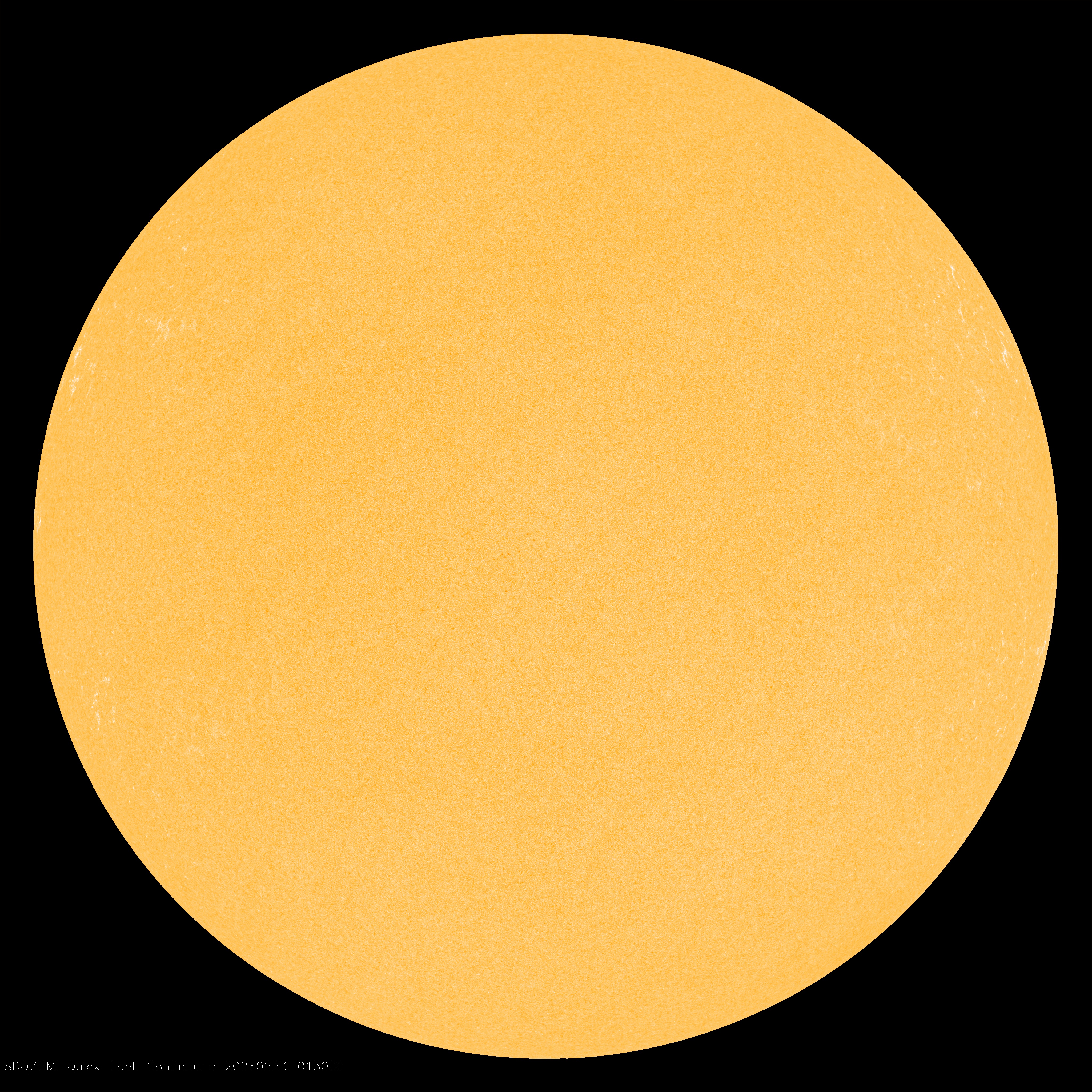
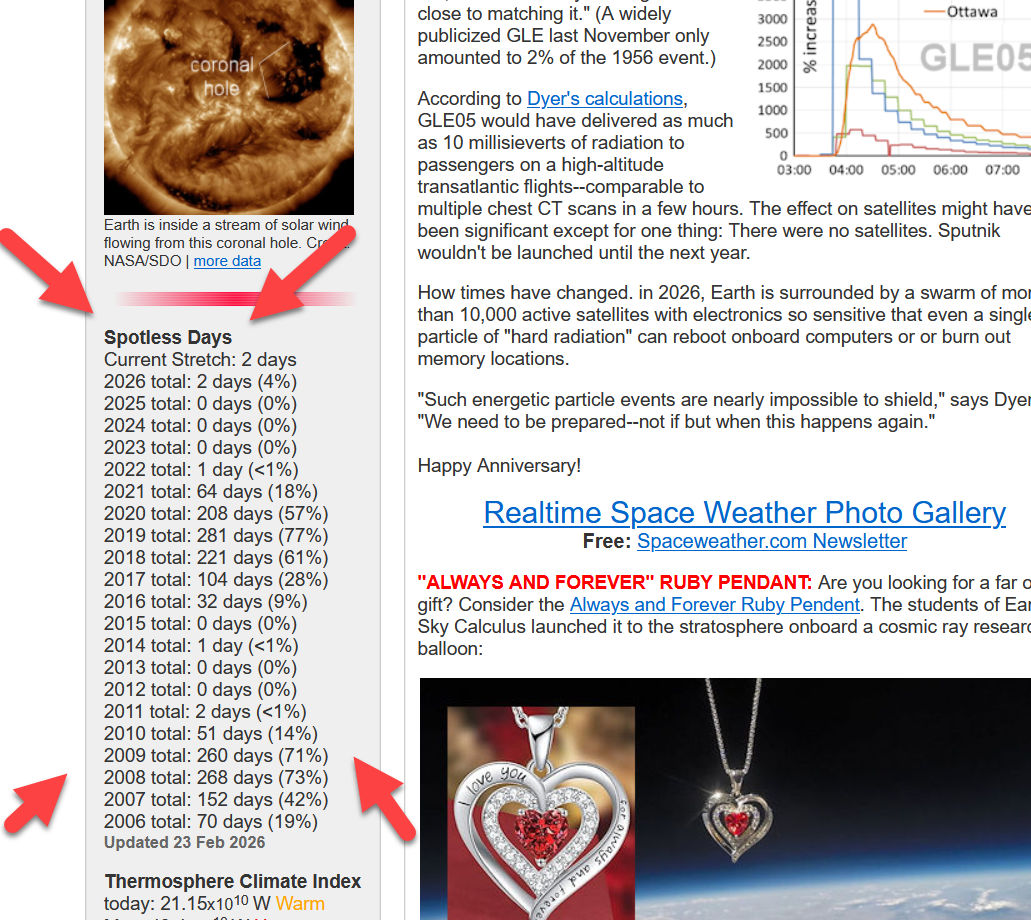
Image taken with a Seestar S50 telescope with its attached solar filter and processed in PS. ~ The solar surface with scattering of sunspots ~ It’s our first clear sunny day in weeks and it was a delight to see some larger sunspots on the surface of the Sun. My image was taken with a Seestar S50 telescope with its attached solar filter capturing a raw movie file and stacking within the unit. I’ve also found an easier way to find the Sun when the Seestar has trouble locating it, by manually slewing there and using a sun finder called Sol Searcher by Tele Vue :-D ~ Spotless Sun ~ Yay! Finally after a couple of days of cloudy weather the clouds parted late this afternoon and I could capture a picture of our spotless Sun. Its been four years now since we’ve seen a smooth unblemished surface on the face of the Sun, but I’m sure it’s not going to last for very long as this active cycle has not finished yet by a long shot! Image taken with a SeestarS50 telescope with the attached solar filter and processed in PS. CREDIT: Spaceweather.com THE SUN IS FLATLINING: With no sunspots actively flaring, the sun's X-ray output has flatlined. The quiet is likely to continue for at least another 24 hours. NOAA forecasters say there is no more than a 1% chance of M- or X-class solar flares on Feb. 24th. Aurora alerts: SMS Text WHERE HAVE ALL THE SUNSPOTS GONE? Click on this image and take a careful look around the solar disk. Can you find any sunspots? We can't either This week has brought the first "spotless days" since 2022. So far, Feb. 22nd and Feb. 23rd have had completely blank suns. There have been no sunspots on the solar disk, breaking an uninterrupted 4 years of non-stop sunspot activity. What does this mean? It's an early warning of Solar Minimum, the low point of the 11-year solar cycle. During years around Solar Minimum, whole months can go by without a single sunspot, racking up dozens of spotless days in a row. Between 2018 and 2020 (the last Solar Minimum) there were more than 700 spotless days in total. You can find the daily counts right here on Spaceweather.com. Solar Cycle 25 still has years of life left in it. However, these spotless days tell us that the current cycle is waning. Sunspots will be back--probably tomorrow--but today is a preview of things to come. https://www.spaceweather.com ~ Sunspot AR 4366 ~ This is the first day in weeks that we’ve had a clear day, so I was very excited to get the telescope out and view this very large complex sunspot group AR 4366 on the surface of the Sun. My images were taken with a Seestar S50 telescope with the attached solar filter then processed in PS. ~ Happy New Year to Everyone ~ Here’s hoping we have lots of surprises in the skies for 2026 :-) Light rain started to fall about 9pm last night for New Years Eve which dampened a few of the firework celebrations here on the Gold Coast, but I’m sure everyone still had a great time! I was determined to capture a picture of the Sun today for the first day of the New Year even though there was quite a lot of cloud about; I did it, so here is the Happy New Year Sun for 2026! Because I post a lot of my images on Spaceweather.com this is the greeting that went with my post today on there website for everyone, if you are interested is what the Sun is currently up to and seeing some amazing solar and night sky images this is the place to go daily at: https://spaceweather.com/ Happy New Year to Dr Tony Phillips and all contributors of Spaceweather.com from all over the world, I hope everybody has a wonderful year in 2026 :-) My images were taken with a Seestar S50 telescope with an attached solar filter; the sky was not very good because of clouds, twenty images were captured then stacked in Registax6 and processed in PS. |
AuthorI just love being under the heavens, come on a journey with me and I’ll share some of the amazing wonders of the Universe with you. Noeleen :-) Archives
September 2026
Categories
All
|


RSS Feed